
Blog
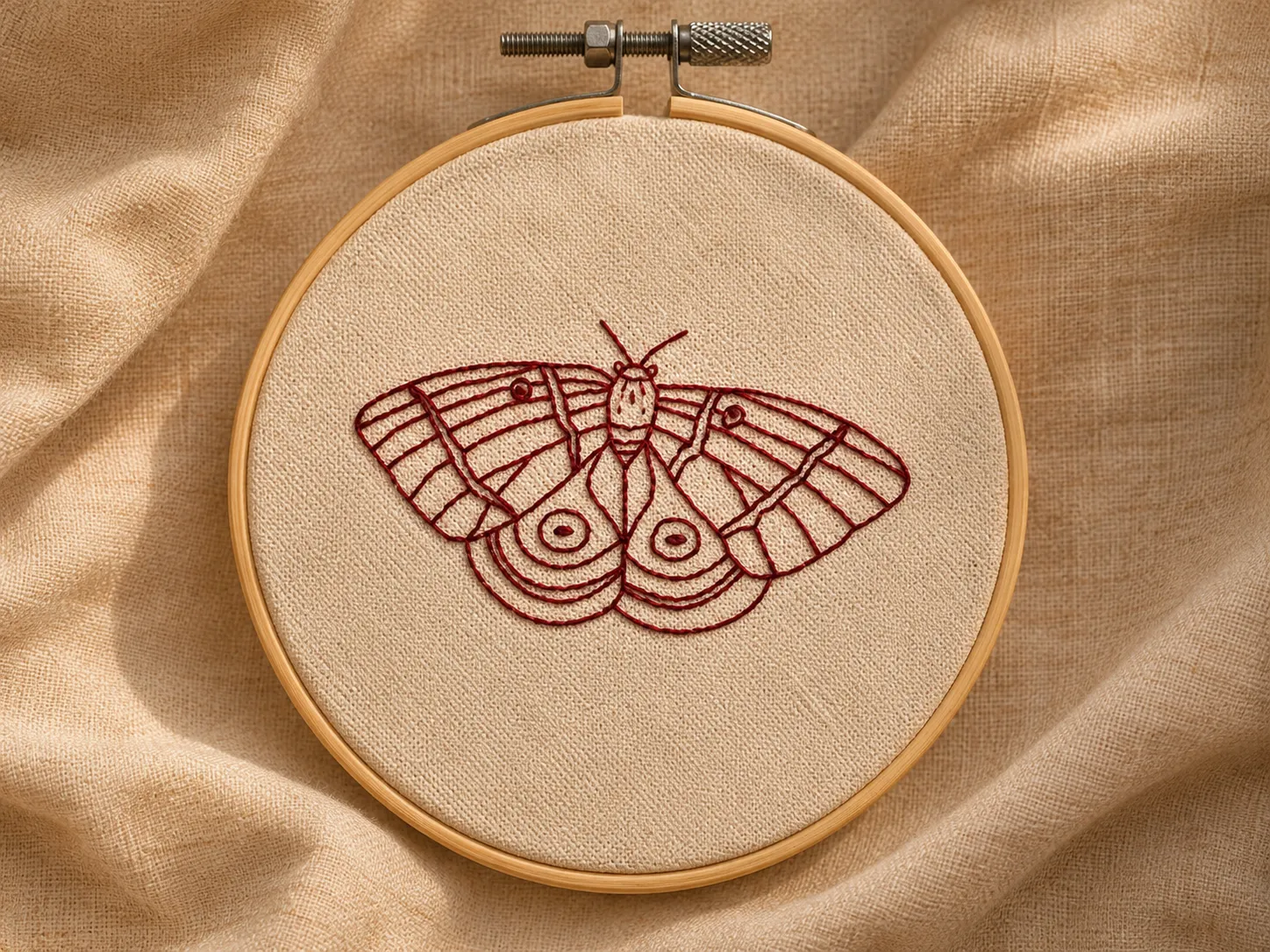
Image: Post cover, illustration created from the original photograph. Source: AI-generated image from a photograph by Iara Lima (2026)
Moths and orixás
For a long time, science believed that several moths belonged to the same species. They were found in different regions of Brazil and received a single name:Eois russearia.
It seemed simple. But nature is rarely as simple as it seems.
Researchers from Unicamp and USP gathered different types of evidence: morphological characteristics, genetic analyses, and the study of the plants on which these moths depend to complete their life cycle.
The result showed that what appeared to be a single species was, in fact, a set of different species. At least eight.
It is an interesting reminder of how science works. Scientific knowledge is not a collection of immutable truths. It is a continuous process of observation, revision, and refinement.
As new methods emerge, new questions also emerge—and often, new answers. But what caught my attention most in this work was not just the discovery. It was the choice of names.
Seven of the new species received names inspired by orixás:
Eois iemanja, along the banks of the Mogi Guaçu River. E. nanan, in the Pantanal. E. oxumare, in the Amazon. E. orumila, also in the Amazon. E. iroco, still in the Amazon. E. ibeji, in São Paulo. E. iogunede, in the Pantanal.
The eighth species received another type of tribute.
Eois stantonaewas named in memory of researcher Mariana Alves Stanton, who participated in the study but passed away before the article was published.
I found it beautiful to realize that taxonomy can also tell stories. Naming a species is never a neutral gesture. It is a way of recording what we consider worthy of remaining in memory.
Sometimes we honor researchers. Sometimes places. Sometimes characteristics of the organism. And, in this case, important references from Afro-Brazilian culture.
It is not common for a scientific article to evoke emotions.
This one did in me. Perhaps because it shows something I have been interested in for a long time: knowledge is also made of culture. Science does not happen outside society.
It is produced by people, in specific places, shaped by histories, references, and ways of seeing the world. Discovering new species would already be reason enough to celebrate.
But discovering new species and choosing names that dialogue with part of Brazil’s cultural diversity makes this work even more significant.
There is something symbolic about it.
For a long time, those moths seemed identical.
It took a closer look to realize that each had its own evolutionary history, its own territory, and its own ecological relationships.
Sometimes, knowing better also means learning to distinguish. Not to separate. But to understand the richness of diversity. Perhaps that is the greatest beauty of taxonomy.
It reminds us that nature never fit into a single box.
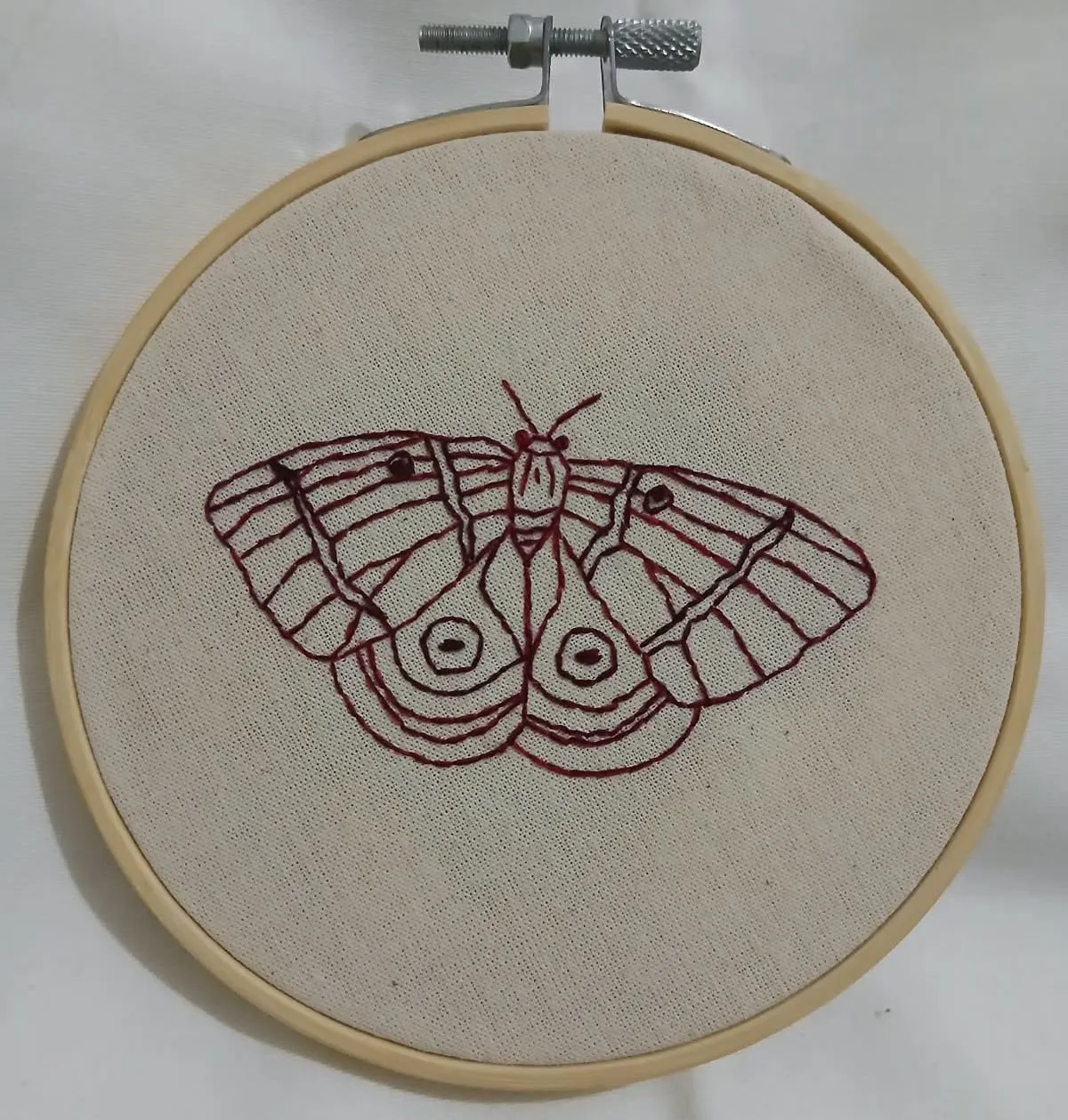
Visit the downloads page to learn how this and other embroideries were made, and make your own.
View references
- Moraes, S., Machado, P.A., Stanton, M.A. et al. Unveiling cryptic diversity: integrative taxonomy discovers eight new species of moths and exposes biodiversity shortfalls in a Neotropical region. Sci Rep 16, 12515 (2026). (Suggested reading here)

Founder of Devir Bordado, but also an embroiderer and researcher. This text is part of an ongoing investigation into how making produces knowledge, memory, and transformation.
Tags
African Diaspora African Diáspora Alice in Wonderland Amazon Ancestry Apple Archaeology Archetypes Astrology Astronomy Autumn Becoming Beltane Botanical Cake Colonization Cycles Embroidery Equinox Esotericism Feminism Greece Hermeticism History Hórus Indigenous Cosmology Information Science Journals Library Science Mabon Magic Memory Moon Music Orishas Ouroboros Recipes Research Science Communication Serpent Symbolism Tarot Technology Textile Art Thoth Time Transformation Wheel of the Year Winter Yule