
Blog
The cover image for this post is being embroidered. Once it is ready, it will frame this post.
Iara
I was born on a Wednesday.
A fine drizzle was falling—one of those that covers the city with an misunderstood melancholy, and the color of the building facades and the paint of the houses become more evident because of the gray that the dense clouds spread. The city becomes quieter, calmer, because no one wants to go out in the rain. And it’s cold. And it’s windy. I was born on a day like that. And I love days like that. Gray city days.
My mother had chosen a name for me. I personally don’t like it and never have, but to avoid controversy, I won’t say what it was. While she remained in the hospital after giving birth, my father went out to do the civil registration.
On the way to the registry office, he ran into an acquaintance at a bar. They talked about the birth and, naturally, the question came up:
“What is the girl going to be named?”
My father answered.
Then that man made an unexpected suggestion.
He said I had been born on a rainy day and that it would be beautiful to receive a name linked to the waters. He suggested a name that, curiously, did not yet exist in the family—a name that carried that image.
He suggested that I be called Iara.
My father liked the idea.
And that is how my name changed even before reaching the registry office.
I never met that man. My father never ran into him again either. Perhaps it was just a casual encounter. Perhaps not. The fact is that a conversation of a few minutes ended up defining an important part of my identity.
Today, looking back, I realize how this name ended up accompanying many of the paths I have traveled.
Iara means “lady of the waters” or “mother of the water,” a word formed from Old Tupi. For a long time, I knew only the most popular version of the character: the mermaid who enchanted men and led them to the bottom of rivers.
Later, researching the history of this figure, I discovered that her trajectory is much more complex. The narratives about Iara were transformed over the centuries by the encounter between different cultures.
Before colonization, chroniclers recorded the existence of the Ipupiara, a male creature described as a monstrous and threatening being. Over time, this imagery came to dialogue with elements brought by Europeans, such as the mermaids of Greco-Roman tradition, the enchanted mouras of the Iberian Peninsula, and other feminine figures linked to the waters.
At the same time, the African diaspora brought to the American continent various cosmologies in which rivers, seas, and lakes were also inhabited by feminine entities. Among them stands out Mami Wata, venerated in different regions of West Africa and later in diaspora communities.
The Indigenous character, therefore, did not remain static. She was continually reinterpreted throughout history.
One of the most widespread versions of the legend tells that Iara was the most skilled warrior of her village. Her brothers, moved by envy, tried to kill her. She reacted in legitimate self-defense. As punishment, she was thrown into the waters by her own father and transformed into an entity of the rivers.
Regardless of the version, it is striking how many of these narratives present a woman whose strength ends up being reinterpreted as danger.
This phenomenon does not happen only in Brazil.
In various maritime cultures, there are feminine figures associated with the waters: mermaids, merrows, ningyo, Atargatis, and so many others. They have different origins but share the same symbolic association between water, transformation, mystery, and power.
Studying these stories made me realize that a myth never remains the same. It changes as it crosses borders, incorporates new cultural references, and comes to answer the questions of each society. That is exactly what happened with Iara.
Today I also understand that my own name ended up going through a similar process.
Later, upon coming to know Umbanda, I found in Iemanjá another great symbolic image linked to the waters, to maternity, and to ancestry. Not because one figure replaces the other, but because both came to dialogue in the way I learned to look at this element that has always been present in my story. In fact, I am her daughter.
Curiously, my research trajectory also moved in this direction.
I began to study memory, heritage, mythology, cosmologies, and ancestry. I discovered that names are also cultural documents. They carry stories, displacements, encounters, and transformations that cross generations.
In the end, I received much more than a name.
I received a narrative.
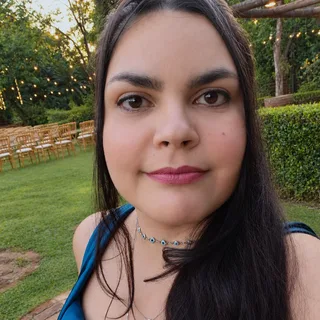
Founder of Devir Bordado, but also an embroiderer and researcher. This text is part of an ongoing investigation into how making produces knowledge, memory, and transformation.
Tags
African Diaspora African Diáspora Alice in Wonderland Amazon Ancestry Apple Archaeology Archetypes Astrology Astronomy Autumn Becoming Beltane Botanical Cake Colonization Cycles Embroidery Equinox Esotericism Feminism Greece Hermeticism History Hórus Indigenous Cosmology Information Science Journals Library Science Mabon Magic Memory Moon Music Orishas Ouroboros Recipes Research Science Communication Serpent Symbolism Tarot Technology Textile Art Thoth Time Transformation Wheel of the Year Winter Yule